The short answer
Height sets the access method, which sets the labor per unit. Glazing type sets how much glass there is and how it is laid out. Existing access equipment decides what can be done from the roof, and what has to be installed or certified first.
Height
| Tier | Typical access | Budget effect |
|---|---|---|
| Storefront (1-3 stories) | Hand cleaning and poles from the ground | Low cost per visit, frequent visits |
| Mid-rise (4-7 stories) | Water-fed poles, lifts and ladders | Quarterly programs are the common baseline |
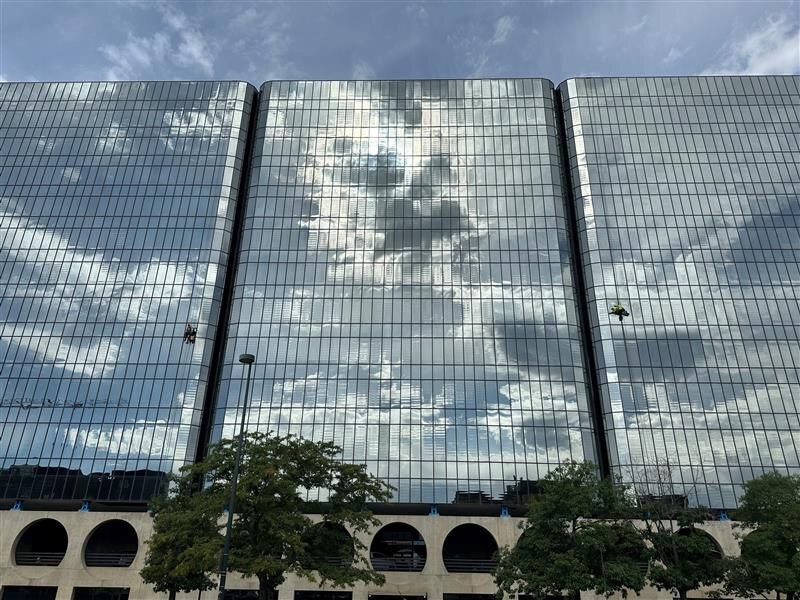
| High-rise (8-15 stories) | Rope descent and swing stages | Scoped per building; facades on a planned program |
| Tower (16+ stories) | Rope descent and swing stages, set by anchors and height | Highest mobilization; planned annually |
See the four height tiers in Commercial Window Cleaning by Building Height.
Glazing type and condition
- Curtain wall: continuous glass, so glass count drives the job
- Punched windows: less glass, more frames, sills and stops, and runoff staining from masonry
- Tinted, coated or heavily built-up glass takes more care and time
Access equipment
| What is on the roof | Budget effect |
|---|---|
| Certified anchors, current records | Rope work can be planned directly; budget the annual inspection |
| Anchors with unknown or expired records | Inspection, testing and certification before work |
| No anchors | Installation as a one-time item, or ground-based access where height allows |
| Permanent powered platform | Owner-side inspection and maintenance under OSHA 1910.66 |
Putting it together
Budget each building by its tier, its glazing and its roof. For window cleaning, get a ballpark from the pricing calculator, then a quote from a walkthrough.
Plan the whole program with the Exterior Maintenance Planning and Budgeting guide, or share your buildings and we will turn them into a tailored annual plan and a quote.