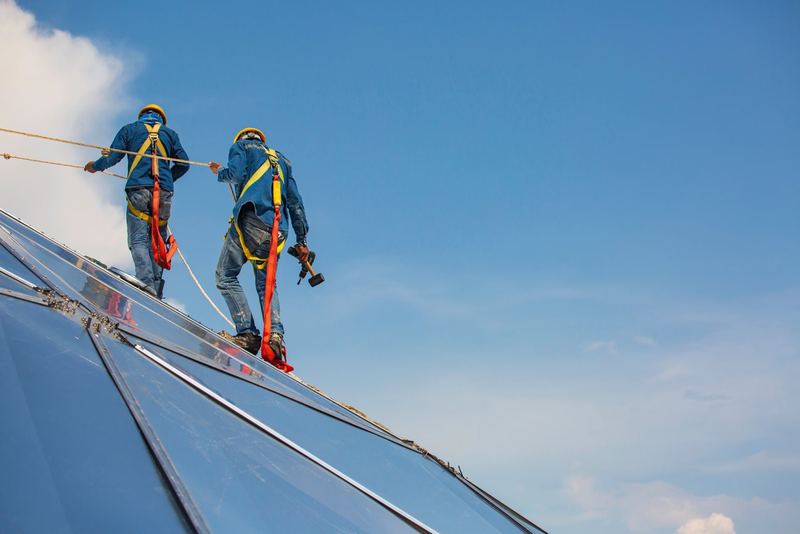
The short answer
Without certified anchorages and the owner's written confirmation, rope descent is off the table. The options are to install engineered anchors, use ground-based access where the height allows, or, on some buildings, invest in a larger permanent access system.
Your options
| Option | Best for | Trade-offs |
|---|---|---|
| Install engineered roof anchors | Buildings over seven stories, or any facade worked from the roof | One-time installation, then annual inspection and certification |
| Davit system | Roof edges, parapets or setbacks that keep a line from hanging clear | More equipment on the roof, same certification cycle |
| Ground-based access: water-fed poles, lifts | Storefront and mid-rise buildings, up to seven stories | Height and site limits; not for taller facades |
| Permanent powered platform | Large or complex facades | Major capital project; OSHA 1910.66 applies |
Why anchors usually win above seven stories
- They serve every future window cleaning, inspection and repair job on the facade
- They open up rope descent, the most common high-rise method
- Laid out for the facade's drops, they keep each visit efficient
Ground-based access for lower buildings
Up to seven stories, water-fed poles, lifts and ladders can reach the glass without roof anchors. See how high water-fed poles reach. For facade washing rather than glass, S&K's drone soft-washing reaches high facades without scaffolding.
What not to do
- Tie off to vents, pipes, rooftop units or parapet caps
- Let a contractor improvise anchorage
- Proceed with rope descent without the written confirmation
If a contractor offers to work without certified anchors, that is your answer about the contractor.
How S&K helps
Through its long-time anchor partner, S&K installs engineered anchor points for window cleaning and facade access, laid out for the drops your building needs, then certifies them and provides the documentation. Start with a free roof compliance survey, or request a quote.