The short answer
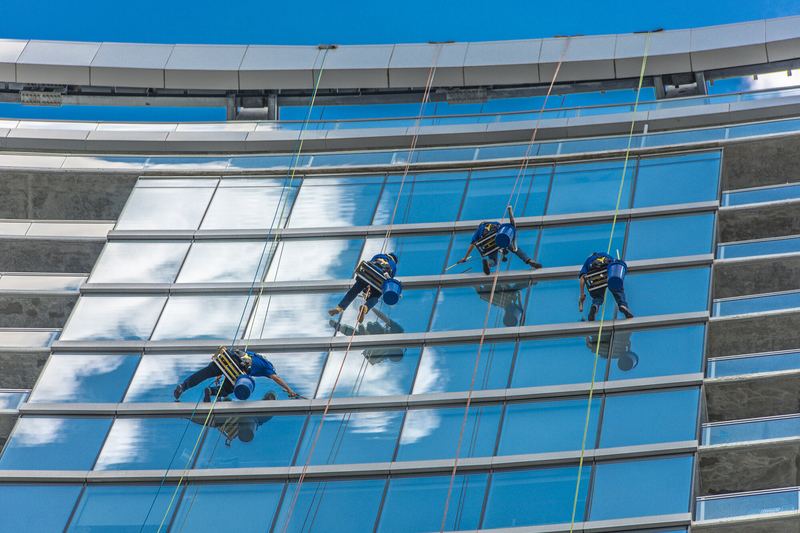
Weather stops work at height, and summer is peak season for high-rise and rope-access work. Plan exterior work by season, build weather days into the schedule, and write the rescheduling rules into the contract.
Weather stops work at height
OSHA prohibits rope descent work in hazardous weather, such as storms or gusty or excessive wind (29 CFR 1910.27). Rain and freezing temperatures also affect whether exterior glass can be cleaned well. The crew on site makes the call, and a safety-first vendor will stop work rather than push it.
How the year runs
- Spring: post-winter facade and window cleaning, and a restoration assessment to catch hard-water staining early.
- Summer: peak season for high-rise and rope-access work. Dates fill first.
- Fall: pre-winter cleaning, gutter cleaning, and annual roof anchor inspection and certification.
- Winter: interior glass, atriums and high dusting, and budgeting next year's exterior program.
See the annual maintenance planning center and the exterior maintenance planning guide.
Contract terms that reduce schedule risk
- Seasonal windows for each building, agreed in advance
- Weather days: how many are expected, and how rescheduled dates are set
- Who calls a weather stop and how you are notified
- Priority order when time is short: entrances and most visible elevations first
- Anchor timing: inspection and certification current before the exterior program starts
- Multi-building sequencing across a portfolio
Plan around peak season
Book high-rise and tower work early, and keep entrances and lobbies on their own monthly cadence so the building shows well while the facade waits for its window. See High-Rise (8-15 stories) and Tower (16+ stories).
How S&K plans it
S&K builds recurring annual programs with one point of contact, so dates, weather stops and rescheduling come from one place across every building you manage.