

High-Rise Window Cleaning
Certified rope-descent and swing-stage crews for the elevations lifts and poles cannot reach. Every at-height job follows a documented, site-specific safety plan with W2 technicians and verified anchor systems.
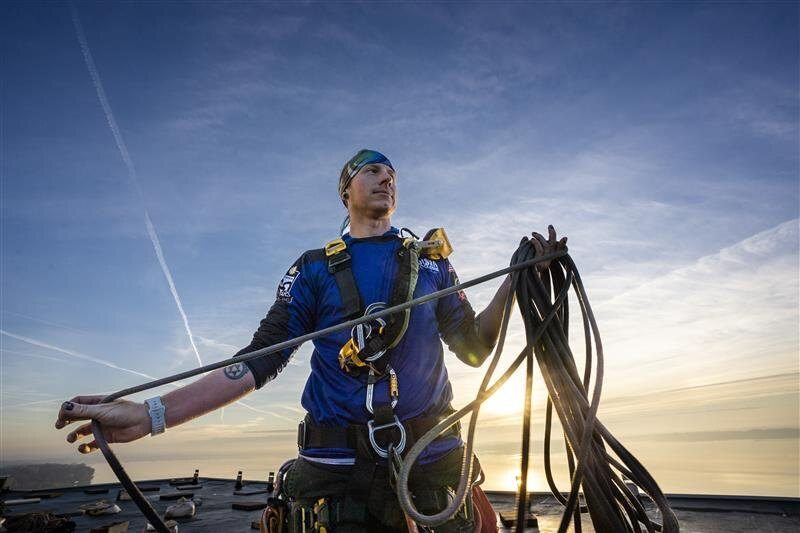
The high-rise work most companies won't touch
From the top of the curtain wall to ground-floor retail, one team handles it all.
- High-rise and curtain wall glass
- Rope descent and swing stage access
- Aerial lifts where height allows
- Window frame and sill cleaning
- Recurring programs on a reliable schedule
How we reach the glass
We set the method on the walkthrough, elevation by elevation. It starts on the roof: anchor locations, certification status and the facade below them.
| Building height | Typical access | Guide |
|---|---|---|
| Storefront (1-3 stories) | Ground-level pole and hand cleaning | Storefront guide |
| Mid-rise (4-7 stories) | Water-fed pole, lift and ladder access | Mid-rise guide |
| High-rise (8-15 stories) | Rope descent and suspended access | High-rise guide |
| Tower (16+ stories) | Anchor-dependent access and scheduling | Tower guide |
Rope descent or swing stage
Both hang from the roof. Many buildings use rope descent for cleaning and a stage for restoration on the same facade.
Rope descent system
One technician on a controlled descent line. Built for routine cleaning, drop by drop. Lighter setup that moves between drops quickly.
Swing stage
A platform suspended from the roof that carries crew and equipment. Fits restoration, repair and heavier equipment, or heights where rope descent is restricted.
Compare them in detail: rope descent systems vs. suspended scaffolding.
Anchors come first
Under OSHA 29 CFR 1910.27, before any rope descent system is used, the building owner must confirm in writing that each anchorage has been:
- Identified, tested, certified and maintained
- Proven to support at least 5,000 pounds, in any direction, for each worker attached
- Inspected every year, and certified by a qualified person as needed and at least every 10 years
No written confirmation, no rope descent. Through our long-time anchor partner, we install, inspect and certify anchors, so the owner's side of the anchor obligation is handled too.
Safety on every drop
- 100% W2 crews: trained, insured S&K employees
- Technicians certified before any at-height work
- A site-specific safety plan for every at-height job, with anchor verification and a certified crew assigned
- Lifts, swing stages and rope gear inspected and serviced routinely
- Certificates of insurance on request
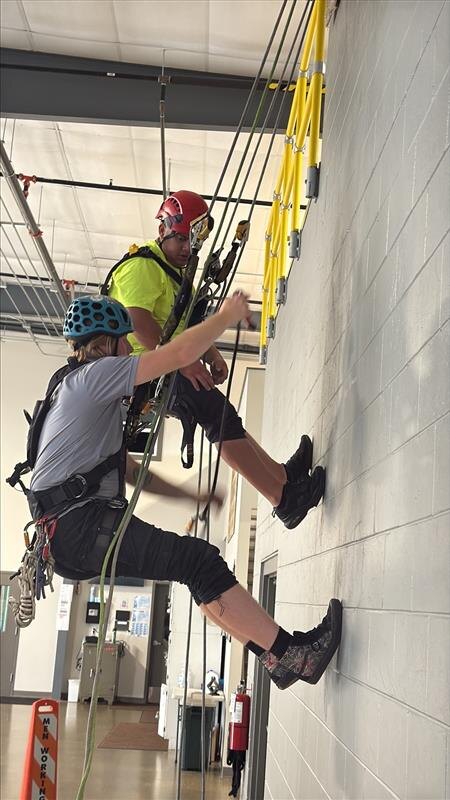
Planning a high-rise program
Scheduling is where high-rise programs succeed or slip.
Season
Summer is peak season for high-rise work. Book early.
Weather
Wind and rain can stop rope and stage work, so the schedule needs slack.
Building operations
Tenant notice, entrances and ground-level areas below each drop, and roof access for the crew. See tenant coordination and sidewalk closures.
Anchor timing
Anchor inspection and certification should be current before the facade program starts.
Build the full year in the annual maintenance planning center.
High-rise window cleaning questions
We set the method on the walkthrough, elevation by elevation. Above seven stories that means rope descent or a swing stage from certified anchors. Lower elevations use aerial lifts, ladders and water-fed poles.
Yes, when the anchors are certified, each worker has an independent fall arrest system, rescue is planned, crews are trained and no one works in hazardous weather. Those are OSHA requirements, not extras.
Yes. Under OSHA 29 CFR 1910.27, before rope descent work the building owner must confirm in writing that each anchorage is inspected every year and certified at least every 10 years. Through our long-time anchor partner, we can inspect, test and certify existing anchors or install new ones.
Only if the contractor can show that other means of access are not feasible or pose a greater hazard, under OSHA 29 CFR 1910.27.
Yes. S&K crews are 100% W2: trained, insured S&K employees, never subcontractors.
It is scoped per building. Height and access, glass count, glass condition and frequency set the number, and rope or stage access changes the labor per pane. Start with a ballpark from the pricing calculator.
Get a quote for your building
A local team member contacts you to scope the work. Not a call center.
Request a Quote